
NATHAN ZWALD


Final Dungeon Level Design


LEVEL-DESIGN
Level design was my main task on this project. With the game beign very short, I had to ensure that the levels relayed the mechanics and their subtleties in short time windows. In the level you can see on the right, each part helps breaking down the elements of the game and make the player understand their perculiarities (for example here : The Fruit and the Liana).
Every glade is a learning point.
For example, in this one, the player is shown the effects of the Fruit on an enemy right before facing a challenge : crossing a pit. The player needs to redo what the enemy has done which is using the Fruit to jump over the pit. The next glade learns him to use the Liana object which, once bound to two pillars, makes anything that touches it bounce. In the third and final glade, the player needs to associate the knowledge of the two previous ones and combine the effects of the two objects to launch a Fruit on a Liana to make it bounce on a rock on the other side of a river.
Hover here
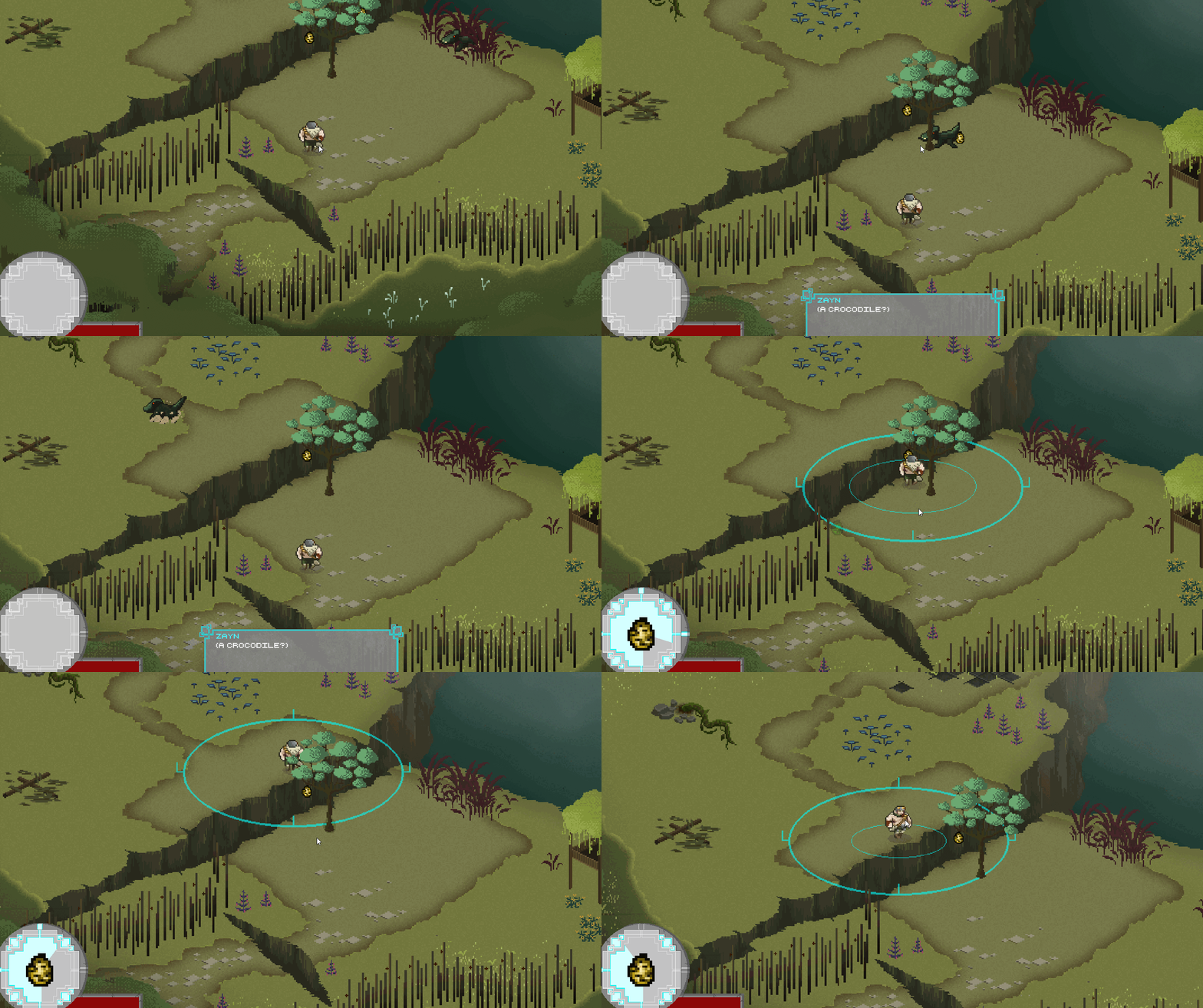

FINAL LEVEL ENVIRONMENT
Hover here
LEVEL DESIGN LAYOUT


INTENTIONS
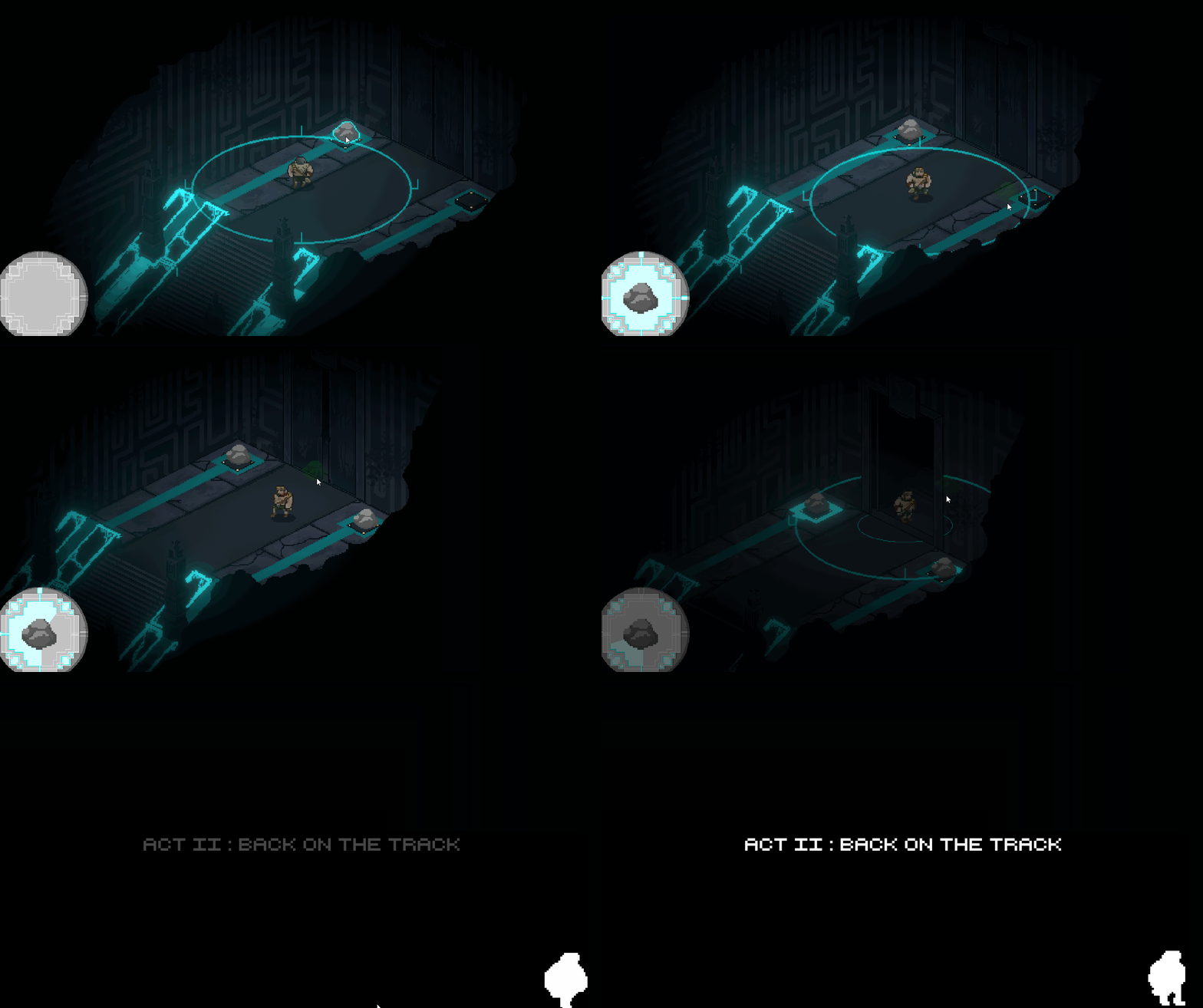
Our first intention with this game is to put the player in a situation where he has to do with what he can find around him. It's from this intention that comes the copy crystal mechanic, certain elements of the world can be scanned and re-used, each one with a specific behaviour. The crystal can only keep one object in memory, which really makes this feeling of working with your surrondings stronger.
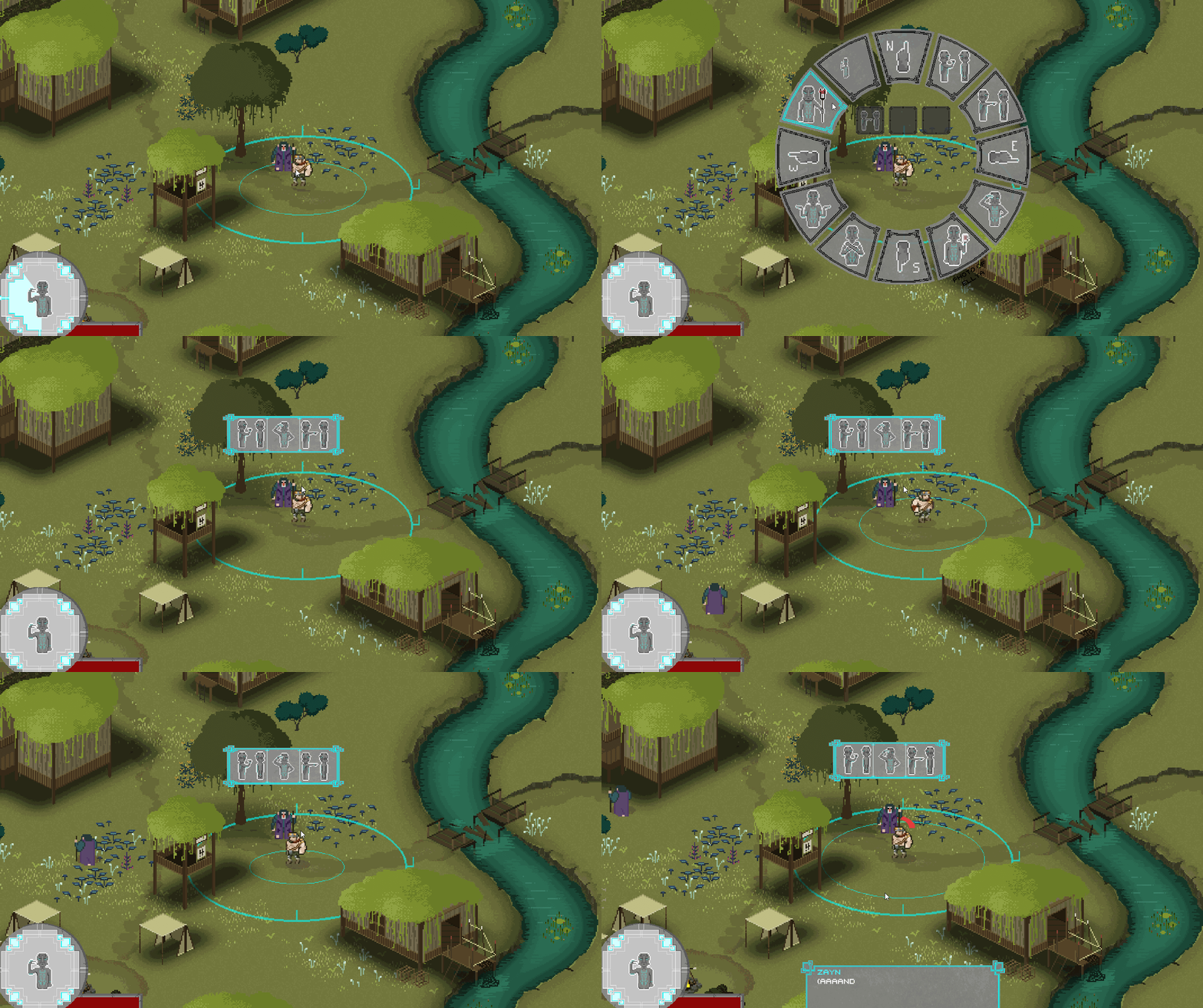
Our other intention is to make the player feel like a stranger, make him loose all of his cultural landmarks. That was achieved by making him interact with the NPCs via a basic sign language with no tutorial. It's by experimenting that the player understands what each sign means and how the NPCs react to them. One entire Act of the game, The Village, is dedicated to using that system to try and get the help of the natives

SYSTEM
The copy crystal is a key element of the game.
We have three items in the game : The Rock, The Fruit and the Liana.
Each item has it's own effect and was designed to interact with the others.
The other main mechanic of the game if the dialogue wheel. By combining the different available signs, you can form sentences which will trigger certain reactions and responses according to which villager you're speaking (more accurately signing) to. They will answer with signs themselves which you have to interpret in order to progress.
A lot of the time spent on this mechanic went into finding sings that are clear and mostly devoid of cultural connotations in order to be understood by all.
CONCEPT
Pitstop is a 2D Zelda-Like with an isometric point of view in which you play as a pilot lost on a stranded island. On it, he finds a cristal that allows him to duplicate objects in his surroundings. He'll have to use it's power to find his wife, Ellya. He will also have to meet the natives of this island with whom he'll have to communicate rudimentarily, with signs and gestures, to pursue his quest.

SYNOPSIS
Stranded on an unknown island after a plane crash, Zayn wakes up to find Ellya, his co-pilot and wife, missing. He must explore the island, facing it's dangers, helping the natives and uncovering it's mysteries to find her.

TEAM

Lucas KAUFF
Project Manager
Lead Programmer